
Little League Shoulder: How Long It Lasts, How It’s Treated, and How to Get Back to the Mound
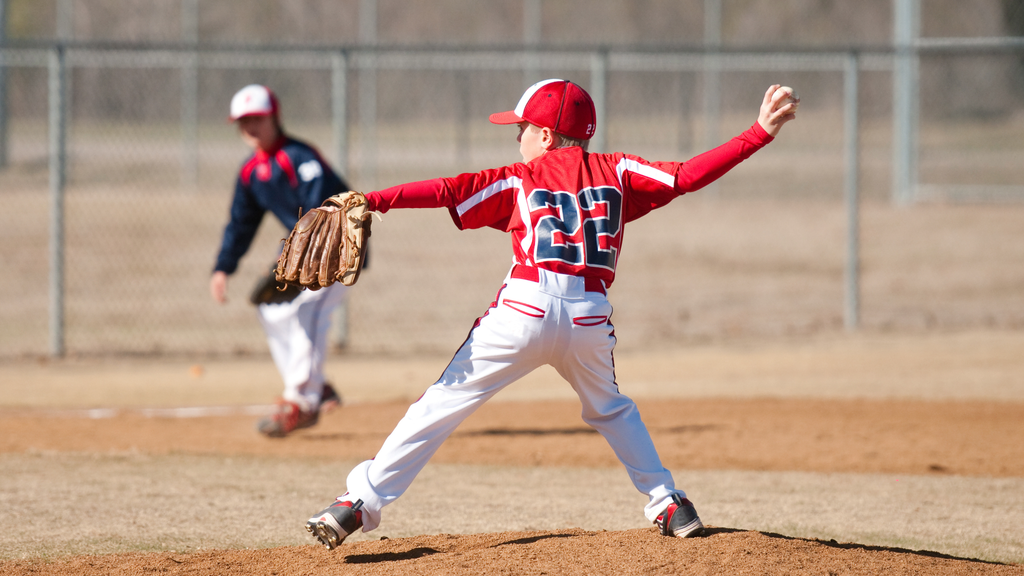
Written by Dr. Josh Funk, DPT
Little League shoulder is growth-plate irritation at the top of the upper arm bone, caused by the repetitive rotational stress of overhead throwing, and it’s the one growth-plate injury in young athletes where the answer isn’t to manage load and keep going. Current best practice is an actual break from throwing, typically around three months, followed by a physical therapist-guided strengthening program and a graduated return to the mound. Research following young throwers through this approach shows the large majority return to their sport symptom-free. It’s common, it’s treatable, and handled right, it’s a lost stretch of throwing, not a lost career. Here’s exactly how that works.
This article is general education for parents and coaches, not a diagnosis of any child’s specific condition. If your child’s shoulder pain is severe, came on suddenly, comes with numbness, tingling, or significant weakness, or shows visible swelling or deformity, have them evaluated by a licensed physical therapist or physician promptly.
A quick refresher on what Little League shoulder is
Little League shoulder is irritation, and in more advanced cases a stress injury, of the growth plate near the top of the humerus (the upper arm bone), right where the rotational forces of throwing concentrate. In a growing thrower, the repetitive torque of the cocking and acceleration phases of a throw stresses that growth plate faster than it can adapt. The result is an aching shoulder or upper arm during and after throwing, often with dropping velocity or accuracy before pain becomes obvious, and tenderness over the upper arm. It’s most common in youth baseball pitchers ages 11 to 16, peaking around 13, but shows up in any young athlete with a repetitive overhead motion: catchers, position players making hard throws, and athletes in tennis, volleyball, and swimming. Pitch volume is the best-known driver, but mechanics, insufficient rest between outings, and weakness or instability through the shoulder blade, core, and hips all load that growth plate too. For the full picture of how it fits alongside the other youth growth-plate injuries, start with our overview of growth plate injuries in young athletes.
Learn more here from the APTA, Physical Therapy Guide to Little League Shoulder
How long does Little League shoulder last?
Honest answer: longer than the other two growth-plate injuries in this cluster, and the timeline depends on getting the first step right.
The growth plate needs an actual break from throwing to heal, not just a lighter throwing load. Case series following young throwers through structured rest report the growth plate remodeling in roughly three to five months on follow-up imaging, and a 2021 systematic review of the evidence found treatment protocols centered on stopping throwing for about three months before a graduated return. Most young athletes who follow that path return to throwing and to their sport without symptoms. The athletes who take longer are typically the ones who returned to throwing too early or kept throwing through the pain in the first place.
Why this is the one condition here where you don’t just manage load
Osgood-Schlatter and Sever’s usually respond to pain-guided activity modification; a young athlete keeps playing with the load dialed down. Little League shoulder is different, and that difference matters enough to say plainly: continuing to throw through shoulder pain puts an active, rapidly growing growth plate under the exact rotational stress causing the problem, and it’s the pathway to a slower recovery, a wider growth-plate injury, and in rare cases lasting changes to how the arm grows.
That doesn’t mean total inactivity. A young thrower can typically keep running, fielding, hitting, and conditioning; what stops is throwing. Treating this one the way you’d treat Sever’s, manage around the pain and keep throwing, is the single most common reason recovery drags out.
How Little League shoulder is actually treated
Modern, evidence-based care runs in three stages, and skipping ahead is what causes setbacks:
- A real break from throwing. Typically around three months, guided by a physical therapist or physician and confirmed by resolved pain and, when imaging was used to diagnose, follow-up findings. This is the non-negotiable first step.
- Rebuilding the throwing kinetic chain, not just the shoulder. Once pain has settled, the work shifts to rotator cuff and scapular stabilization strength, shoulder range of motion, and the hip, core, and leg strength that a throw actually depends on. Exercises such as rotator cuff and scapular retraction strengthening, single-leg balance and hip strengthening, core rotational work, and progressive resistance training build the capacity the shoulder needs to absorb throwing loads again.
- A graduated, criteria-based return to throwing. Once full pain-free range of motion and strength are back, a structured throwing progression rebuilds distance, velocity, and pitch volume in stages, typically starting with easy long toss before working back toward the mound and full pitch counts.
One safety note worth passing along: pain during or after throwing is the signal to stop and get reassessed, not a cue to push through with less effort or fewer pitches. Surgery is not part of standard treatment for this condition.
Can my child keep playing sports with Little League shoulder?
Mostly yes, just not throwing. Running, fielding, hitting off a tee, conditioning, and non-throwing positions are typically fine to continue while the shoulder heals, as long as they stay pain-free. The piece that has to stop is throwing, including light or “easy” throwing, until a physical therapist or physician clears that step. Trying to keep a young pitcher’s arm “in shape” with reduced-effort throwing during this window is one of the more common ways recovery gets prolonged.
Returning to throwing, on criteria not the calendar
Getting back to the mound works as a staircase, not a leap. An athlete progresses only when the current step is pain-free, both during the activity and the next day, moving from full pain-free shoulder range of motion and strength, to easy long toss at increasing distance, to mound work, to game-speed pitch counts. A flare in pain means dropping back a step, not returning to a full shutdown.
That criteria-based approach is the same principle we apply after any injury: readiness is something you demonstrate, not a date you reach.
How Rehab 2 Perform treats Little League shoulder
We start by confirming it’s actually Little League shoulder and ruling out what mimics it, rotator cuff strain, labral irritation, and elbow-driven compensation patterns can all show up as thrower’s shoulder pain, and each needs a different plan. From there we build around your athlete’s Movement Health across the entire throwing chain, not just the joint that hurts: shoulder and scapular control and throwing mechanics (competency), rotator cuff, core, hip, and leg strength (capacity), and readiness for the real demands of the mound (conditioning). Progress is guided by clear criteria, not a guess, and we don’t stop at pain relief. We build the capacity and the mechanics that keep it from returning. It’s the same approach behind our Sports Rehabilitation programs across every youth and adolescent injury we see, not just this one.
That approach is why families keep coming back to it: an NPS of 94 and more than 2,600 five-star Google reviews across our DMV locations.
You don’t need a referral to start. In Maryland and Virginia, direct access laws let a parent bring a young athlete in for an evaluation on their own decision.
Reducing the risk it comes back
Little League shoulder is closely tied to pitch volume, insufficient rest, and mechanics, so prevention is largely about managing those three things. Follow age-appropriate pitch count and rest-day guidelines (USA Baseball and MLB’s Pitch Smart program publish current recommendations by age), avoid pitching on multiple teams at once without coordinating total pitch counts, address throwing mechanics with a qualified coach, and build shoulder, scapular, hip, and core strength in the off-season rather than only during the season. Research also links year-round single-sport specialization to a higher rate of these overuse injuries than playing multiple sports. Manage the volume, build the whole kinetic chain, and each season gets safer than the last.
When to get it checked
Most shoulder pain in a young thrower is worth evaluating rather than waiting out, since this is the one condition in the cluster where delay carries more downside. See a professional if the pain persists beyond a throw or two, if velocity or accuracy is dropping, if there’s any numbness, tingling, or significant weakness, or if pain shows up at rest or at night. Any young thrower with lingering shoulder or elbow pain should be assessed before their next outing, not pushed through it.
Why this matters to me
I played Division I and professional sport, and I’ve watched too many young throwers get pushed back to the mound before the growth plate was ready, chasing a tournament or a roster spot. Little League shoulder is the one injury in this cluster that deserves real caution, not because it’s dangerous long-term when handled right, but because rushing it is exactly how a manageable few months turns into a much longer problem.
Frequently Asked Questions
It depends on catching it early and stopping throwing right away. Case series and a 2021 systematic review point to roughly three months of throwing cessation before a graduated return, with most young athletes returning to their sport symptom-free. Continuing to throw through the pain is the most common reason it drags on longer.
How is Little League shoulder treated?
Treatment runs in stages: a real break from throwing (typically around three months), rotator cuff, scapular, core, and hip strengthening once pain resolves, and a structured, criteria-based return-to-throwing progression. Surgery is not part of standard care.
Mostly yes, just not throwing. Running, fielding, hitting, conditioning, and non-throwing positions are usually fine to continue pain-free. Throwing, including light or reduced-effort throwing, needs to stop until cleared by a physical therapist or physician.
Once pain has resolved, rotator cuff and scapular stabilization strengthening, shoulder range-of-motion work, and hip, core, and leg strengthening build the capacity the whole throwing chain needs. A physical therapist tailors the progression and the graduated throwing program to your athlete.
With an actual break from throwing and a guided strengthening and return-to-throwing program, most young athletes recover fully and return to their sport symptom-free. Continuing to throw through it, rather than stopping, is what tends to prolong or worsen it.
No. Standard care is conservative: rest from throwing, physical therapy, and a graduated return-to-throwing program. Surgery is not part of standard treatment for this condition.
Follow age-appropriate pitch count and rest-day guidelines, avoid pitching on multiple teams without coordinating total pitch counts, work on throwing mechanics, build shoulder, scapular, hip, and core strength year-round, and encourage more than one sport. Research links single-sport specialization to a higher rate of these overuse injuries.
In Maryland and Virginia, no. Direct access laws let you book an evaluation for your young athlete without a physician’s referral.
Ready to Perform at Your Best?
If your young thrower has shoulder pain, don’t wait for it to become the reason they miss the season. Book an evaluation at one of our 15+ DMV locations, and we’ll confirm what it is, get the throwing break right from the start, and build a strengthening and return-to-throwing progression around their Movement Health, so they come back stronger and reduce the risk of it coming back. No referral needed in Maryland or Virginia. That’s Ready 2 Perform, and Assess, Don’t Guess.