
Sever’s Disease: How Long It Lasts, How It’s Treated, and How to Keep Your Child Playing
Written by Dr. Josh Funk, DPT
Sever’s disease, also called calcaneal apophysitis, is a self-limiting growth-plate irritation at the back of your child’s heel, and the encouraging part is the same as it is for other growth-plate injuries: your child usually doesn’t have to sit the season out. The old advice was rest completely until the pain goes away, which can stretch on for months. Current best practice is activity modification guided by pain, calf and Achilles flexibility work, and progressive strengthening, an approach research shows gets most young athletes back to sport in around two months. It’s common, it’s manageable, and it’s rarely a reason to end a season. Here’s exactly how that works.
This article is general education for parents and coaches, not a diagnosis of any child’s specific condition. If your child’s heel pain is severe, came on suddenly, causes a limp that isn’t improving, or comes with significant swelling, numbness, or pain at rest or at night, have them evaluated by a licensed physical therapist or physician.
A quick refresher on what Sever’s disease is
Sever’s disease is irritation of the growth plate at the back of the heel bone (the calcaneus), right where the Achilles tendon attaches. In a growing athlete, repetitive impact from running and jumping pulls on that attachment point faster than it can adapt. The result is heel pain during and after activity, tenderness when you squeeze the sides of the heel, and sometimes a limp or a tendency to run and walk up on the toes to avoid loading the heel. It’s the most common cause of heel pain in active children, typically ages 8 to 15, and shows up most in soccer, track, basketball, and gymnastics. A tight calf usually contributes, along with weakness, instability and overall motor control deficits. For the full picture of how it fits alongside the other youth growth-plate injuries, start with our overview of growth plate injuries in young athletes.
Learn more here from AAOS OrthoInfo Sever’s disease guide
How long does Sever’s disease last?
Honest answer: it depends on how it’s managed, and that’s mostly in your control.
Left alone, the underlying sensitivity can linger through the growth spurt, potentially a year or more, until the heel’s growth plate finishes maturing, usually by the early-to-mid teens. That’s where the reputation for dragging on comes from. But that timeline describes waiting it out, not treating it.
With active management, calf and Achilles flexibility, targeted strengthening, activity modification, and supportive footwear, the picture changes. A 2025 review of the treatment evidence found that physical therapy facilitated return to sport in about two months, faster than passive approaches. The heel doesn’t need to fully “finish growing” before your child is back playing pain-free; it needs the load managed and the calf, foot, and entire leg built up to handle it.
Why shutting it down completely is the slow road
This is the part worth rethinking. Complete rest feels like the responsible move, and it does calm the pain down. The problem is what it doesn’t do. Rest reduces the load without building the calf and Achilles’s capacity to handle it, so the moment your athlete returns to full sport, the same demand meets the same under-prepared heel, and the pain comes right back.
Waiting it out also costs a young athlete real development time, conditioning, skill, and connection to their team, none of which come back for free. The evidence-based approach flips it: modify activity to a tolerable level while actively building the calf, ankle, and foot, so they come back sooner and come back stronger.
How Sever’s disease is actually treated
Modern, evidence-based care centers on managing load and building capacity underneath the injury, not shutting down and waiting:
- Pain-guided activity modification. Rather than stopping everything, dial activity to a level the heel tolerates, using pain as the guide: it should stay low during activity and settle by the next morning. Pain that spikes or lingers overnight means back off a step.
- Calf and Achilles flexibility. A tight calf is one of the most consistent contributors, since it increases the tension on the growth plate with every step. Regular calf and Achilles stretching is a foundational piece of care.
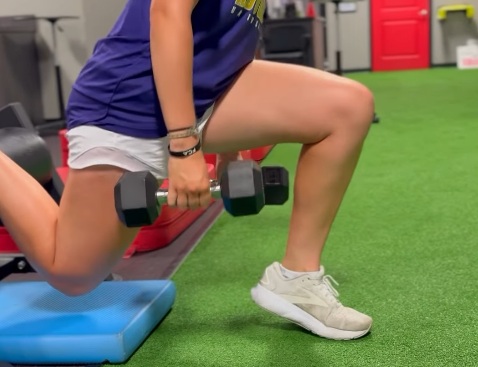
- Progressive strengthening. Calf raises and foot and ankle strengthening, including dorsiflexion work, build the tissue’s tolerance to load, not just its flexibility. Exercises such as squats, lunges, single leg squats and other plyometrics exercise would also be part of a well rounded program.
- Supportive footwear and heel cushioning. Heel cups, cushioned inserts, or supportive shoes reduce direct stress on the growth plate. Flat, unsupportive shoes and barefoot activity on hard surfaces tend to make it worse.
- A gradual return to running and jumping. Reintroduce impact activity in stages rather than jumping back to full training volume.
One safety note worth passing along: short-term ice or over-the-counter anti-inflammatories can take the edge off, but don’t use them to mask pain right before a game. Pain is the signal that guides safe loading, and blunting it removes the feedback that protects a growing heel. Immobilization or casting is reserved for rare, severe cases that don’t respond to standard care, and surgery is not part of standard treatment for this condition.
Can my child keep playing sports with Sever’s disease?
Often, yes, with the load managed rather than the season ended. The current approach lets many young athletes keep participating to the extent pain allows, using pain as the guardrail: activity that stays low and settles by the next morning is generally fine to continue, while a sharp increase means scaling back for a bit. It’s not all-or-nothing. It’s managed.
Returning to sport, on criteria not the calendar
Getting back to full sport works best as a staircase, not a leap. An athlete moves up a step only when the current one is pain-free during the activity and the next morning. A typical progression runs from calf and foot strengthening to low-level jumping and running drills to full sport-specific training. If pain flares, you drop a step, not all the way back to the sideline.
That criteria-based approach is the same principle we apply after any injury: readiness is something you demonstrate, not a date you reach.
How Rehab 2 Perform treats Sever’s disease
We take that best practice and run it fully. First we confirm it’s actually Sever’s and not something that mimics it, Achilles tendinopathy, plantar fasciitis, or a stress fracture can all show up as heel pain in an active kid, and each needs a different plan. From there we build around your athlete’s Movement Health: the quality of how their leg, foot and ankle move (competency), how much load the heel and calf can handle (capacity), and readiness for the real demands of their sport (conditioning).Progress is guided by clear criteria, not a guess, and we don’t stop at pain relief. We build the capacity that keeps it from returning. It’s the same approach behind our Sports Rehabilitation programs across every youth and adolescent injury we see, not just this one.
That approach is why families keep coming back to it: an NPS of 94 and more than 2,600 five-star Google reviews across our DMV locations.
You don’t need a referral to start. In Maryland and Virginia, direct access laws let a parent bring a young athlete in for an evaluation on their own decision.
Reducing the risk it comes back
Because Sever’s is tied to growth and load, it can flare again during the next growth spurt or a jump in training volume. The way to lower that risk is the same work that resolves it: keep building calf and foot strength, ramp training volume gradually, check that footwear is actually supportive, and encourage multiple sports. Research links year-round single-sport specialization to a higher rate of these overuse injuries than playing multiple sports. Build the athlete, manage the load, and each season gets safer than the last.
When to get it checked
Most Sever’s disease is safe to start managing while keeping your child active, but see a professional if the pain is severe or came on suddenly, if it’s causing a limp that isn’t improving, if there’s significant swelling, or if it comes with pain at rest or at night, which points toward something other than typical Sever’s. Pain that isn’t responding to sensible modification is also a reason to get a plan in place rather than keep guessing.
Why this matters to me
I played Division I and professional sport, and now I coach and raise young athletes of my own, and I’ve watched this exact pattern play out over and over: a parent hears “growth plate” and assumes the safest move is total shutdown. Sever’s almost never calls for that. It calls for a plan. Handled well, it’s a manageable stretch, not a lost season.
Frequently Asked Questions
It depends on how it’s managed. Left untreated, the sensitivity can persist through the growth spurt, potentially a year or more, until the heel’s growth plate matures. With active management, calf and Achilles flexibility work, progressive strengthening, and activity modification, a 2025 review found physical therapy gets most young athletes back to sport in around two months.
How is Sever’s disease treated?
Current best practice is activity modification guided by pain, calf and Achilles stretching, progressive calf and foot strengthening, and supportive footwear or heel cushioning, rather than complete rest. Short-term ice or NSAIDs can help with acute pain but shouldn’t be used to mask pain before activity. Surgery and casting are not part of standard care.
Often yes, with load managed rather than the season ended. Many young athletes keep participating to the extent pain allows, using pain as the guardrail: activity that stays low and settles by the next morning is generally fine to continue, while a sharp increase means scaling back temporarily.
Calf and Achilles stretching is foundational, since a tight calf is one of the most consistent contributors. From there, progressive calf raises and foot and ankle strengthening, including dorsiflexion work, build the tissue’s capacity to handle load. A physical therapist tailors the progression to your athlete.
Yes. It’s self-limiting and resolves once the heel’s growth plate matures, typically by the early-to-mid teens. Active management doesn’t just wait for that; it relieves pain and returns most young athletes to sport well before full skeletal maturity.
No. Standard care is conservative, activity modification, stretching, strengthening, and supportive footwear. Casting or immobilization is reserved for rare, severe cases that don’t respond to standard care, and surgery is not part of standard treatment.
Keep building calf and foot strength, increase training volume gradually, make sure footwear is actually supportive, and encourage more than one sport. Research links single-sport specialization to a higher rate of these overuse injuries. Building capacity and managing load is what lowers the risk of it flaring in the next growth spurt or season.
In Maryland and Virginia, no. Direct access laws let you book an evaluation for your young athlete without a physician’s referral.
Ready to Perform at Your Best?
If your young athlete has heel pain that looks like Sever’s, they probably don’t have to lose the season to it. Book an evaluation at one of our 15+ DMV locations, and we’ll confirm what it is, build a calf-and-foot strengthening and return-to-sport plan around their Movement Health, and get them back on the field while reducing the risk of it coming back. No referral needed in Maryland or Virginia. That’s Ready 2 Perform, and Assess, Don’t Guess.