What Is Movement Health – And Why It Determines Whether You Stay Active for Life
Movement health is your body’s capacity to move the way it was designed to: competently, with enough capacity to handle load, and conditioned to sustain it over time. At Rehab 2 Perform, Dr. Josh Funk, DPT built an entire clinical model around three measurable pillars of movement health: Competency, Capacity, and Conditioning. Most people don’t think about movement health until something breaks down. That’s the wrong starting point. R2P logged 164,262 patient visits in 2025 using this framework, and the principle is consistent: people who understand their movement health don’t just recover. They sustainably perform at a higher level than before they got hurt.
Movement Health Is Not a Buzzword – It’s a Framework
Movement health is a clinical construct with measurable components, not a wellness trend. Josh named it, defined it, and built a 15-location practice around it.
R2P earned an NPS of 94 and 2,500+ five-star Google reviews. Outcomes that reflect a framework people can feel, not just a philosophy they’re told about.
The Three Pillars of Movement Health
Movement Competency – The Foundation
Competency is the ability to perform fundamental movement patterns correctly. The quality of how you move before you ever add load or intensity. It includes squat mechanics, hip hinge patterns, single-leg stability, and overhead mobility. If the foundation is off, every layer built on top of it could be compromised.
R2P uses a variety of screens, assessments and tests to establish a baseline. “Assess, Don’t Guess” is not a slogan. It’s the clinical standard.
Movement Capacity – The Load Layer
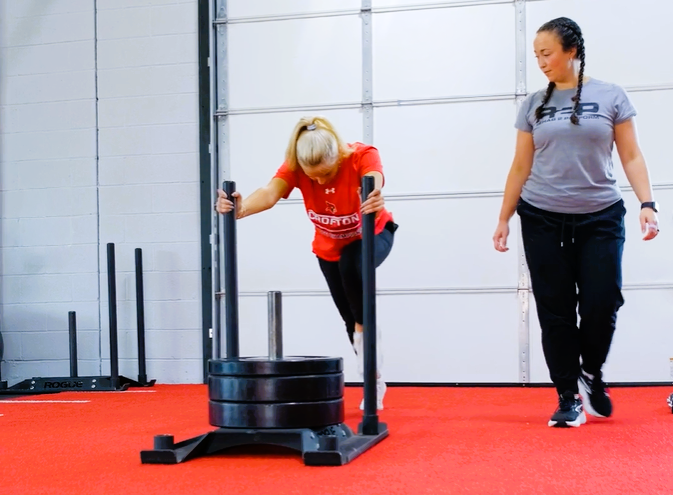
Capacity is how much your body can handle: strength output, power, endurance under load. It’s the difference between being able to do a movement correctly once versus sustaining it under fatigue, sport demand, or the physical requirements of everyday life.
R2P uses things like Y Balance, hop testing, hand held dynamometry, VALD force plates and HUMAC NORM isokinetic dynamometry to measure capacity objectively. Not estimated by feel, but measured in numbers that tell a clinician exactly where a patient is relative to where they need to be.
Movement Conditioning – The Durability Layer
Conditioning is the ability to maintain competency and capacity over time and under stress. It’s what determines whether your movement health holds up in the fourth quarter, the 18th mile, or the fourth decade of an active life.
This is the pillar most traditional physical therapy skips entirely. Discharging a patient when pain resolves, before conditioning is tested, is how re-injury happens. R2P doesn’t close a case until all three pillars are addressed.
Why Most People Have a Movement Health Deficit Without Knowing It
Movement health deficits are usually silent until they contribute to an injury, a performance plateau, or a potential surgery consult. The absence of pain is not a guarantee of long term health.
R2P saw roughly 12,000 new patients in 2025. A significant portion arrive post-discharge from traditional health care – people who were told they were fine, then got hurt again. The movement health gap is real and it’s measurable.
How R2P Assesses Movement Health
Assessment is not a formality at R2P. It’s the entire clinical starting point. An ecosystem of screening, assessing and testing modalities produce data that guide decisions from day one.
Assess, Don’t Guess is the operational standard, not just the clinical one.
Movement Health Is Proactive, Not Reactive
You don’t need an injury to address your movement health. R2P’s Perform for Life programs, built for runners, postpartum women, youth athletes, and active adults, exist specifically to build and maintain movement health before breakdown occurs.
R2P operates two distinct lanes: Ready 2 Perform (reactive, performance-based physical therapy) and Perform for Life (proactive, cash-pay wellness and performance programs). Movement health is the connective framework that runs through both.
Frequently Asked Questions
Movement health at Rehab 2 Perform is built on three pillars: Competency (the quality of your fundamental movement patterns), Capacity (how much load and demand your body can handle), and Conditioning (your ability to sustain both over time and under stress). All three are assessed, measured, and addressed before a patient is considered ready to perform.
Fitness is a general measure of physical capability. Movement health is specific. It evaluates the quality, load tolerance, and durability of how your body moves. You can be fit and still have significant movement health deficits that put you at injury risk.
Yes, and that’s the point. R2P’s Perform for Life programs are designed specifically for people who want to build movement health proactively: runners, active adults, postpartum women, youth athletes. You don’t need a diagnosis to benefit from understanding how well you move.
Rehab 2 Perform offers movement health assessments at all 15 current locations: Annapolis, Baltimore, Bethesda, Columbia, Easton, Gambrills, Hood College, Largo, Owings Mills, Frederick, Germantown, Mt. Airy, Williamsport, Leesburg, Reston, Tysons, and Springfield.
Ready to Perform at Your Best?
Ready to understand your movement health? Schedule a Ready 2 Perform evaluation at any of R2P’s 15 DMV locations and find out exactly where your Competency, Capacity, and Conditioning stand – before your body tells you the hard way.
Learn more at Rehab2Perform.com.