
Post-Race Recovery: Why Feeling Better Isn’t the Whole Picture
By Dr. Rachelle Barrett, DPT , Performance Physical Therapist, Rehab 2 Perform Gambrills | November 2026
You can walk down the stairs normally again. Your legs are coming back to life. And that little voice is getting louder:
“An easy three miles wouldn’t hurt… maybe I’ll see how the pace feels.”
Runner brain. Very convincing. Not always great at recovery.
If you crossed the Bay Bridge on Sunday, or finished Baltimore or Marine Corps earlier this fall, congratulations! Before you start looking for your next finish line, give yourself a minute to enjoy this one. You put in the work. You did the thing. Show the medal and share the pics.
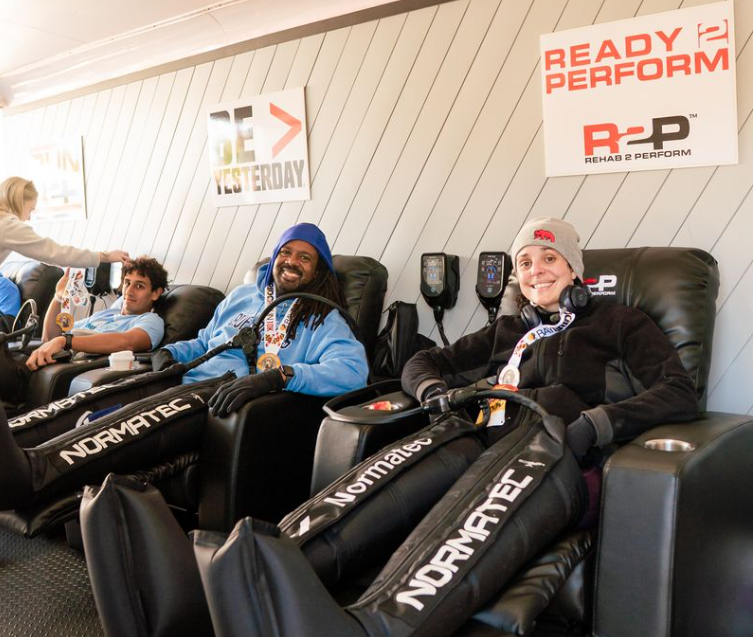
And if you got your legs into the compression boots at the R2P Recovery Trailer after the bridge, you’ve already started.
Now let’s give your body a chance to catch up, because post-race recovery is part of the race too.

Why Feeling Better Isn’t the Whole Picture
One of the trickiest parts of post-race recovery is that soreness doesn’t tell the whole story. Your legs can feel better while your body is still recovering from everything you asked of it on race day.
That first run back can feel surprisingly good. It still doesn’t need to become a workout.
There’s no single recovery schedule that fits every runner. Your race distance, effort, training history, and how you’re doing afterward all matter.
Keep Your Recovery Simple
For now, keep the priorities simple:
- Sleep: Give yourself room for a little extra.
- Fuel: Keep eating regular meals and snacks, even with fewer miles.
- Move gently: Walking and comfortable mobility count.
- Take the pressure off: You don’t need to prove your fitness this week.
And if you’re not itching to run yet? That’s okay, too. After weeks of following a plan, a little breathing room can feel pretty good.
Try This: Hide the Pace
When you’re ready to return to running, try covering your watch screen or leaving it at home.
Keep the effort conversational. Give yourself permission to walk. Finish without needing to squeeze in another mile.
I love a watch as much as anyone, but it has no idea how your tendons are doing. Let pace take a back seat while you pay attention to your effort, any discomfort, and how you feel later that day and the next morning.
Feeling good is encouraging. It isn’t a reason to skip the gradual return.
Before You Pick Your Next Race
What are you proud of that your finish time doesn’t show?
Maybe you stayed patient early. Fueled better. Kept going through a rough stretch. Or made it to the starting line after a training cycle that asked a lot of you.
Write that down while it’s fresh. Those wins deserve a place next to your medal.
Already eyeing the next one? Bookmark our guide to the running taper and race morning warm-up for when it’s two weeks out. Until then: sleep a little more, hide the pace, and let runner brain wait its turn.
Put What You Learned to Work
Once you’ve had time to recover, your race experience can help shape what comes next.
Where did you feel strong? What started bothering you? What would you like to feel more confident about?
A Running Analysis gives us a chance to connect those experiences with a closer look at your running mechanics, strength, and mobility. We’ll use what we find to build practical next steps around your goals.
You don’t have to have another race picked out. Wanting to feel better on your regular Tuesday run is a good goal, too.

Dr. Rachelle Barrett, DPT is a Performance Physical Therapist and Running Specialist at Rehab 2 Perform in Gambrills, MD. She works with runners of all levels, from first-timers to triathletes, helping them identify the mechanics and strength gaps that limit performance and cause injury. Rachelle leads the Run R2P community at Gambrills and conducts running analyses for athletes across Maryland and Virginia.
Frequently Asked Questions About Post-Race Recovery
There’s no single schedule that fits every runner. Your race distance, effort, training history, and how you’re doing afterward all shape your timeline. Feeling better is a good sign, but it isn’t the whole picture, so make the return to running gradual.
When you’re ready, keep the first runs easy and conversational. Cover your watch or leave it at home, give yourself permission to walk, and pay attention to your effort, any discomfort, and how you feel later that day and the next morning.
Not necessarily. Soreness doesn’t tell the whole story, and your legs can feel better while your body is still recovering from race day. That first run back can feel surprisingly good. It still doesn’t need to become a workout.
Yes. After weeks of following a training plan, a little breathing room can feel pretty good. Use it for extra sleep, regular meals, and gentle movement like walking and mobility.
Once you’ve recovered, a Running Analysis connects what you felt on race day with a closer look at your running mechanics, strength, and mobility. A performance physical therapist uses those findings to build practical next steps, whether you have another race picked out or just want your regular runs to feel better.
Fitness Forward Physical Therapy
About Rehab 2 Perform
Rehab 2 Perform is a cutting-edge health and wellness company changing expectations of the healthcare experience. With 15+ locations across the Maryland and Virginia region, R2P delivers a gym-based, movement-driven approach to rehabilitation and performance. The company’s team of physical therapists is dedicated to helping individuals of all ages and abilities move, feel, and perform better for life. Schedule Now
We accept all major insurances, including Tricare, VA Community Care, the Johns Hopkins Healthcare Network, and Kaiser Permanente.