
Hip Strength for Runners: The Muscle Group Doing More Than You Think
By Dr. Rachelle Barrett, DPT — Performance Physical Therapist, Rehab 2 Perform Gambrills | August 2026
Why I Test Hip Strength on Nearly Every Runner I see
I had a runner in this week, a guy in his 40s, mid-way through an early fall race training block. Good mileage base, no pain, no complaints. He just wanted a tune-up before he kept building.
We put him through a forward single leg step down test. Nothing complicated, just standing on one leg on a step, slowly lowering until the opposite heel taps the ground and then returning to the start position.
What I was looking to see was if he was able to keep his hips level. His hip dropped excessively every rep on one side.
He had no idea. Nothing hurt. Nothing felt off. But every time the pelvis drops excessively, somewhere else has to compensate. Over thousands of steps, those small increases in stress can become painful.
Hip strength doesn’t get the attention it deserves. Runners typically spend plenty of time building their calves, quads, and hamstrings by running and lifting. But one area that still gets overlooked is the glutes.
Running alone isn’t enough to build the hip strength and pelvic control you need. Strong glutes have to be trained on purpose if you want to keep your pelvis level, your stride efficient, and your body moving well mile after mile.
When those muscles are strong, your stride holds up better under fatigue. When they’re undertrained, something else picks up the slack, usually the knee or the IT band, and usually without you noticing until miles add up.
The good news: this is one of the easiest things to build. A few focused minutes a few times a week, and most runners feel a real difference in how their stride holds together late in a run.

Try This: The Forward Single Leg Step Down Test
Here’s the exact test I ran on him, and one you can do yourself in under two minutes.
- Stand on one leg at the edge of a step or curb.
- Slowly bend your knee and lower your other foot toward the ground.
- Let your heel lightly tap the floor, then return to the starting position.
- Watch your hip the whole time, not just your knee. Have someone film it if you can. It’s hard to see your own hip position in real time.
- Do 5 slow reps per leg.
Does your hip stay level the whole way down? Or does it dip to one side?
If one side dips, that’s not a problem, it’s information. It just means that side could use some direct attention.
Dr. Conor demonstrates the test here:
My Go-To Exercises for Hip Strength
If your hip dipped on one or both sides, here’s where I’d start. These are the exercises I prescribe most often for this exact pattern.
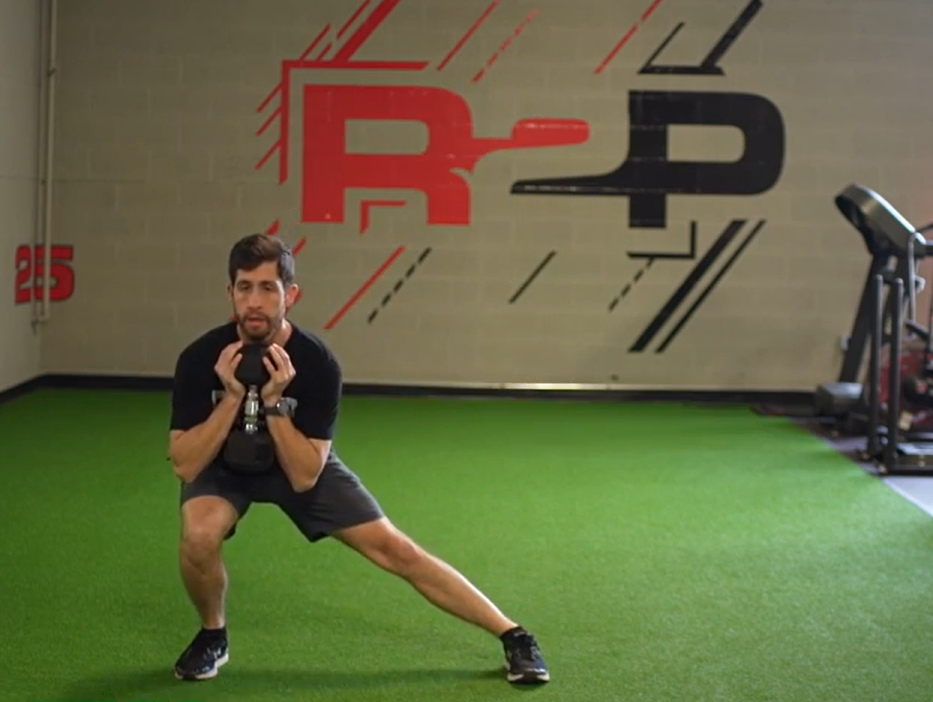
Lateral Lunges
Step one leg out to the side, sit your hips back and down into that leg while keeping the other leg straight, then push back to standing. These build the hip abductor strength and lateral control that keep your pelvis level on landing.
8-10 reps per side, 2-3 sets.
Side Planks
Lie on your side, prop up on your forearm, and lift your hips until your body forms a straight line from shoulder to feet. This is one of the best ways to train the glute medius and the core-hip connection that controls pelvic drop during single-leg stance.
20-30 second holds, 2-3 per side. Add a top-leg lift once the hold feels controlled.
Add them in. A few focused minutes, a few times a week, is usually enough to see a real difference in how your stride holds together late in a run.
Train Hips Before They Find You
Hip strength doesn’t announce itself until it’s already costing you something. It’s not the flashy part of training, and it won’t show up on your watch or in your splits. But it’s working every single stride, whether you’ve trained it or not.
Test it. Train it on purpose. Give it the same attention you give your mileage. The runners who stay healthy longest aren’t the ones who never find a weakness. They’re the ones who go looking for it first.
Take the Guesswork Out of Your Training
Feeling strong is a great sign. It just doesn’t tell you the whole story on its own.
A Running Performance Analysis at Rehab 2 Perform shows you exactly how your hips are holding up under load, mechanics, strength, and stride control, so you know what to build and how. Get the details and elevate your runs today.

Dr. Rachelle Barrett, DPT is a Performance Physical Therapist and Running Specialist at Rehab 2 Perform in Gambrills, MD. She works with runners of all levels, from first-timers to triathletes, helping them identify the mechanics and strength gaps that limit performance and cause injury. Rachelle leads the Run R2P community at Gambrills and conducts running analyses for athletes across Maryland and Virginia.
Frequently Asked Questions About Hip Strength for Runners
Hip drop happens when your pelvis tilts down on one side while you’re balanced on the opposite leg during a stride. It usually means the hip abductors and glutes on the stance leg aren’t controlling the pelvis the way they should. It’s common, often painless at first, and one of the most frequent findings I see in a running assessment.
Run the single leg step down test above. Stand on one leg at the edge of a step, slowly lower your other foot to tap the ground, and watch whether your hip stays level or dips to one side. A dip on one or both sides means that side could use direct attention.
Not usually. Running builds strength in the calves, quads, and hamstrings fairly efficiently, but the glutes, especially the muscles that control pelvic stability, typically need to be trained on purpose. Lateral lunges and side planks are where I start most runners.
Yes, especially if nothing hurts yet. A running analysis is built to catch mechanical issues like hip drop before they turn into pain or injury. Waiting until something hurts usually means addressing a bigger problem than the one you could have caught early.
Fitness Forward Physical Therapy
About Rehab 2 Perform
Rehab 2 Perform is a cutting-edge health and wellness company changing expectations of the healthcare experience. With 15+ locations across the DC, Maryland, and Virginia region, R2P delivers a gym-based, movement-driven approach to rehabilitation and performance. The company’s team of physical therapists is dedicated to helping individuals of all ages and abilities move, feel, and perform better for life. Schedule Now
We accept all major insurances, including Tricare, VA Community Care, the Johns Hopkins Healthcare Network, and Kaiser Permanente.