
How Long Does ACL Recovery Take? Usually 9 to 12 Months, But the Calendar Isn’t the Answer
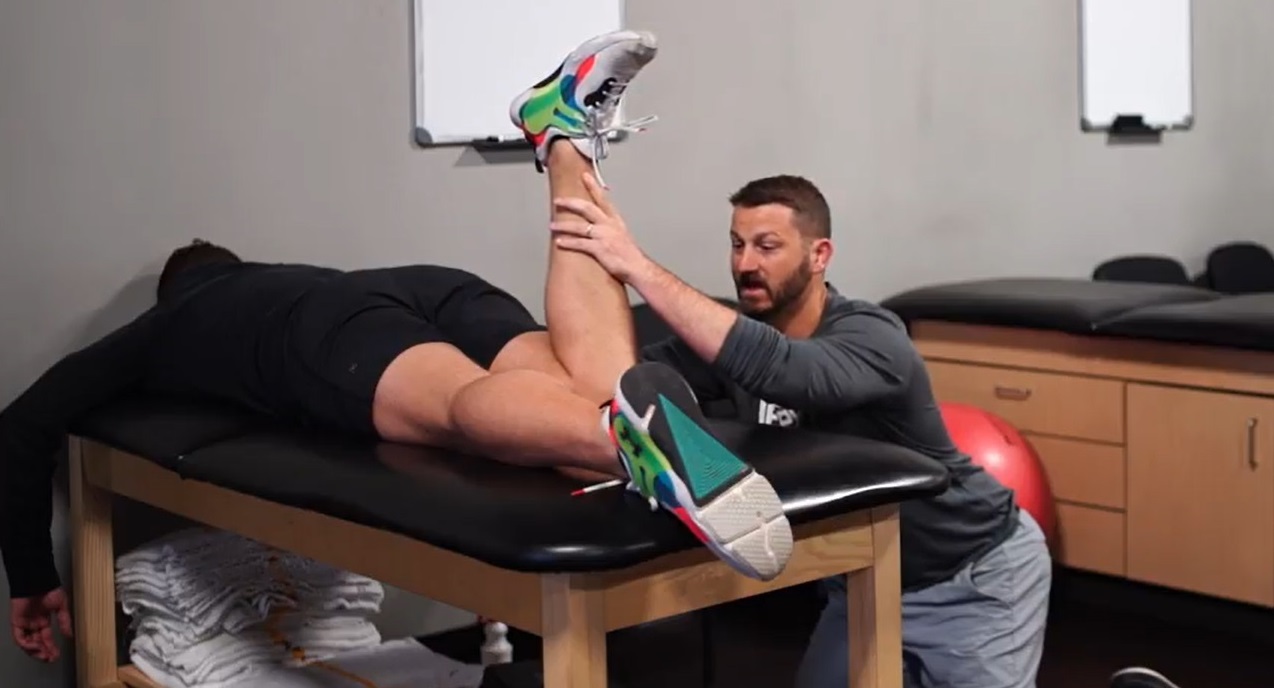
For most people, returning to sport after ACL reconstruction takes 9 to 12 months. That’s the honest range. But the date is the least useful part of the answer. Recovery is governed by meeting objective criteria, not by hitting a number on the calendar, and a knee can feel fine while still being measurably weaker than the other side. Coming back on how you feel, instead of on proof, is one of the biggest drivers of a second injury. At Rehab 2 Perform, we clear athletes on data, including strength symmetry measured on the HUMAC NORM and force metrics through VALD force decks, so you return strong and confident.
The honest timeline
ACL recovery moves through phases, and while everyone’s pace differs, the arc is fairly consistent:
- Weeks 0 to 6: Calm the knee down. Reduce swelling, restore full range of motion, and switch the quad back on. This foundation shapes everything after it.
- Months 1 to 3: Build strength and control. Progressive loading, single-leg work, and normal walking and stair mechanics.
- Months 3 to 6: Add running, more advanced strength, and early plyometrics once you’ve earned them.
- Months 6 to 9: Power, change of direction, and sport-specific work, layered in as your numbers support it.
- Months 9 to 12: Return-to-sport testing and clearance, then a graded return to full competition.
Individual timelines vary widely based on the graft, the person, and any additional injuries. The phases matter more than the exact dates.
Why the calendar lies
Here’s the part most timelines leave out. Time does not equal readiness. Research consistently shows that strength deficits after ACL surgery can persist well past the point where the knee feels normal, and independent of how many months have passed. You can hit 9 months, feel great, and still be walking around with a quad that’s meaningfully weaker on the surgical side.
That gap is exactly where re-injury happens. Studies have found that returning to sport before meeting objective criteria, and returning earlier than about 9 months, is associated with higher rates of a second ACL injury. The knee that feels ready and the knee that tests ready are often not the same knee. The only way to know the difference is to measure it.
What “ready” actually means
Readiness is a set of criteria, not a feeling and not a date. The commonly used markers include:
- At least 9 months since surgery before returning to cutting and pivoting sport.
- Quadriceps strength symmetry of roughly 90% or better between legs, measured objectively. This is the number people most often fail without knowing it.
- Hop test battery at roughly 90% symmetry across single and repeated hop tasks.
- Full range of motion and no swelling after activity.
- Psychological readiness, meaning you actually trust the knee, measured with tools like the ACL-RSI.
- Surgeon clearance.
The above criteria is a sample of criteria and not meant to be an exhaustive list.
You cannot eyeball 90% strength symmetry. This is where objective testing stops being optional. Isokinetic testing on the HUMAC NORM measures exactly how much force each leg produces, so the return-to-sport decision runs on a real number instead of a guess.
To note: exact thresholds vary by protocol. Some return-to-sport programs use 95%.
How Rehab 2 Perform guides ACL recovery
We treat ACL recovery the way the evidence says to: criteria first, calendar second. At each phase, we measure where you actually are, strength, symmetry, control, and power, using our objective assessment stack, including the HUMAC NORM, VALD force plates, and Tindeq or Dynamo. That’s Assess, Don’t Guess applied to the highest-stakes return in sports medicine.
Tracking symmetry at three, six, and nine months turns a vague “getting better” into a clear picture of what’s left to close before you’re cleared. It’s the difference between returning on hope and returning on proof. That’s Ready 2 Perform, care that takes you all the way back, not just to the point where the pain stops.
Why this matters to me
I’m a Doctor of Physical Therapy, University of Maryland. Before that I captained Division I lacrosse at Ohio State and played professionally in the NLL, and I came back from an injury that nearly ended in surgery.
Here’s what I know from both sides of it. An athlete cleared by a date will always wonder if they’re actually ready, and that doubt shows up in how they move. An athlete cleared by their numbers steps back on the field knowing. Objective testing doesn’t just lower re-injury risk. It gives you back your confidence, and confidence is a huge part of performance. That’s why we built our ACL care around proof.
Frequently Asked Questions
For most people, returning to sport after ACL reconstruction takes 9 to 12 months. Recovery follows a phased, criteria-based path, and the exact timeline varies by person, graft, and any additional injuries. Meeting objective readiness criteria matters more than the number of months.
Usually not safely. Research links returning before about 9 months, and before meeting objective strength and function criteria, to higher rates of a second ACL injury. Most people are still carrying measurable strength deficits at 6 months even when the knee feels good.
Commonly used criteria include at least 9 months since surgery, quadriceps strength symmetry of roughly 90% or better measured objectively, a hop test battery at about 90% symmetry, full range of motion with no swelling, psychological readiness, and surgeon clearance.
However, there are much more exhaustive criteria used at Rehab 2 Perform to determine full readiness. Protocols vary, so specific thresholds are set by your clinical team.
The Limb Symmetry Index compares the strength of the surgical leg to the other leg, expressed as a percentage. It’s a key return-to-sport marker, often measured with isokinetic testing like the HUMAC NORM. You cannot judge it by feel, which is why objective measurement matters.
No. Strength deficits can persist well past the point where the knee feels normal, independent of how many months have passed. That’s why recovery is judged by objective criteria rather than the calendar.
In Maryland and Virginia, no. Direct access laws let you begin physical therapy without a physician’s referral. Referrals from your surgeon are welcome as well.
Some ACL injuries are managed without surgery, depending on the tear, the knee’s stability, and a person’s goals. This is a decision made with your surgeon and physical therapist. Objective testing helps guide it either way.
Ready to Perform at Your Best?
If you’re recovering from an ACL injury or surgery, don’t leave your return to a guess or a date on the calendar. Book an evaluation at one of our 15 DMV locations and we’ll measure exactly where your strength and symmetry stand, then build the plan to get you cleared on proof. No referral needed in Maryland or Virginia. That’s Ready 2 Perform, and Assess, Don’t Guess.