
Grip Strength Is a Health Marker
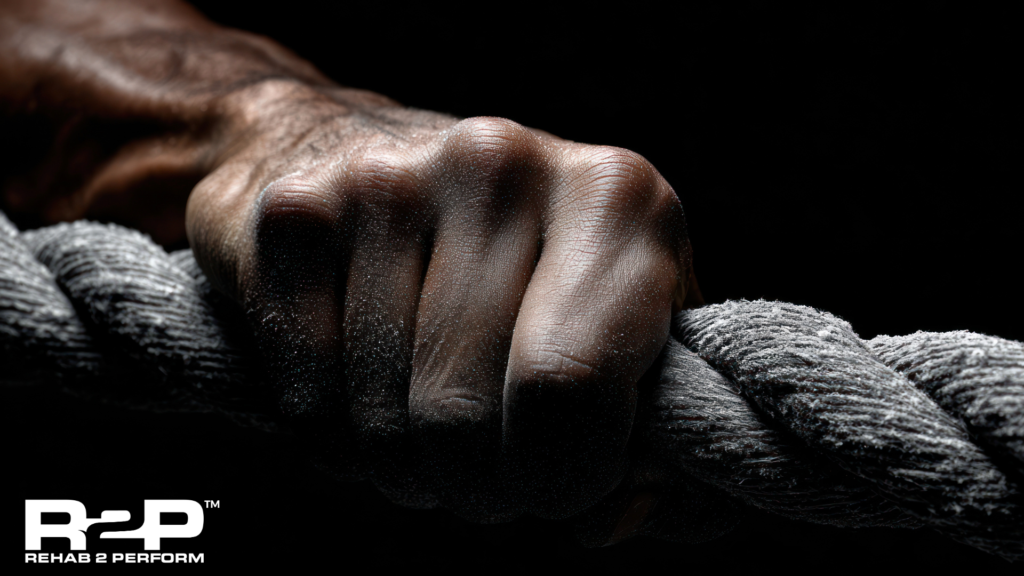
Why Strong Hands Support Elbow Health, Performance, and Longevity
Grip strength is often overlooked in rehab unless someone is dealing with clear elbow pain or struggling to hold onto something during training. But grip strength reflects far more than the muscles in your forearm. In many ways, it is a window into the overall capacity of your upper body and a useful indicator of how well your system can handle physical demand.
At Rehab 2 Perform, we view grip strength as a foundational element of both performance and recovery. The hands are the first point of contact with the world. Whether you are lifting weights, carrying groceries, swinging a racquet, climbing, or simply opening a jar, grip strength determines how efficiently force travels through the arm and into the rest of the body.
If the hand cannot create and maintain force, the rest of the system has to compensate.
Why Grip Strength Matters for the Elbow
Grip strength plays a major role in elbow health. The muscles that control your fingers and grip originate at the elbow and run down through the forearm into the hand. When those muscles are underprepared, fatigued, or overloaded, the tendons around the elbow absorb more stress than they are designed to handle.
That is one reason elbow issues such as tennis elbow or golfer’s elbow can linger longer than expected. The elbow is often treated as the problem, but the real issue may be a lack of strength and endurance in the gripping system.
Grip strength directly influences:
- Elbow and shoulder function
- Force transmission through the arm
- Performance in sport and training
- Control during everyday tasks
When grip is weak, the body finds ways to compensate. This often leads to excessive strain on the wrist and elbow tendons, increased forearm tension, and inefficient movement patterns through the shoulder and upper back. Over time, that extra stress can contribute to persistent elbow symptoms and reduced performance.
Beyond the Elbow: Grip as a Health Indicator
Grip strength is not just important for athletes or gym performance. Research consistently shows that grip strength is associated with broader health outcomes across the lifespan.
Studies have linked grip strength with:
- Lower injury risk
- Greater functional independence as we age
- Stronger overall health markers
In fact, grip strength is often used in research as a quick indicator of physical capacity. It reflects how well the nervous system, muscles, and connective tissues work together to generate and sustain force.
This is why grip strength is sometimes referred to as a “biomarker” of health. It is not simply about squeezing harder. It represents your ability to interact with the physical world in a capable and confident way.
Strong hands help you carry, lift, stabilize, and control objects in motion. In other words, grip strength turns general strength into usable strength.
Common Myths About Grip Strength
Grip training is frequently misunderstood, especially when someone is already dealing with elbow discomfort. Clearing up a few myths can help people approach it more effectively.
Myth: Grip training is only for lifters or athletes.
Fact: Grip strength affects daily tasks like carrying bags, holding tools, and maintaining dexterity as we age.
Myth: If gripping hurts, it should be avoided completely.
Fact: Avoidance often reduces tissue tolerance. Smart, gradual loading helps tendons rebuild strength.
Myth: Deadlifts and pull-ups are enough grip training.
Fact: Those movements help, but grip strength has multiple components that often need direct training.
Understanding these distinctions allows rehab to focus on rebuilding capacity rather than simply protecting the elbow.
Training Grip Without Flaring Symptoms
One of the biggest mistakes people make during elbow rehab is avoiding grip training entirely because of discomfort. The opposite extreme can also happen when someone jumps back into heavy gripping too quickly and aggravates symptoms again.
The solution is not avoidance. It is proper progression.
Effective grip training should follow a few simple principles:
- Gradual loading: Start with manageable resistance and build capacity over time.
- Variety: Train different wrist positions and grip types to distribute stress across tissues.
- Tolerance-based progression: Increase intensity only when the elbow handles the previous level well.
When done correctly, grip training supports tendon health instead of irritating it. Tendons respond well to controlled, progressive loading. Over time, this builds durability in the forearm muscles and the structures that support the elbow.
The Three Types of Grip That Matter
To fully develop grip strength and support elbow health, it helps to train multiple types of grip rather than relying on one movement pattern.
Crush Grip
This is the ability to close your hand and generate squeezing force. Examples include squeezing a gripper or holding a dumbbell tightly.
Support Grip
Support grip is your ability to hold onto something for time. Think of farmer’s carries, hanging from a pull-up bar, or holding a heavy barbell during a deadlift.
Pinch Grip
Pinch grip challenges the thumb and fingers without wrapping the entire hand around an object. Plate holds or pinch carries are common examples.
Each type places slightly different demands on the muscles, tendons, and nervous system. Training all three helps build balanced forearm strength and improves how force is distributed through the elbow and shoulder.
The R2P Approach
At Rehab 2 Perform, we integrate grip training into upper body rehab as a foundational element. Instead of isolating the elbow and hoping symptoms resolve, we restore strength and coordination across the entire chain.
That includes the hands, wrists, forearms, elbows, shoulders, and trunk working together to produce and control force. Grip strength becomes both a training tool and a measurement of progress.
As grip improves, people often notice better control in lifts, reduced elbow irritation, and greater confidence during daily tasks and sport.
Because ultimately, grip strength is not just about the forearm. It is about capacity.
And building capacity is how we help people stay Ready 2 Perform and continue to Perform For Life.
If you are dealing with elbow pain, forearm fatigue, or grip weakness that limits your training or daily activities, our team can help. Book a complimentary physical therapy consult with Rehab 2 Perform and learn how building grip strength can support long-term elbow health and performance. Schedule Now
About Rehab 2 Perform
Rehab 2 Perform is a cutting-edge health and wellness company changing expectations of the healthcare experience. With 15+ locations across the DC, Maryland, and Virginia region, R2P delivers a gym-based, movement-driven approach to rehabilitation and performance. The company’s team of physical therapists is dedicated to helping individuals of all ages and abilities move, feel, and perform better for life. Schedule Now