
SI Joint Pain in Pregnancy: How Physical Therapy Can Help
What Is SI Joint Pain in Pregnancy and Why Does It Happen?
Pregnancy transforms the body in remarkable ways. As ligaments loosen, posture shifts, and the body adapts to new weight distribution, many women begin to experience pain deep in the low back or across the back of the hips. This is often SI joint pain in pregnancy, caused by pelvic instability or sacroiliac joint dysfunction, and it is one of the most common musculoskeletal complaints during pregnancy.
The sacroiliac joints sit where your pelvis meets the lower spine. When those joints become irritated because one side moves more than the other, or because muscle coordination breaks down, the result is sharp or aching pain in the low back, hips, or groin that worsens with walking, rolling over in bed, or standing on one leg.
Why Pregnancy Increases Your Risk
The hormone relaxin is designed to allow more movement in the pelvis to prepare for labor. Combined with changes in posture, abdominal pressure, and muscle recruitment patterns, the system can fall out of balance. Common symptoms include:
- One-sided SI joint pain, often worse on one hip than the other
- Difficulty standing or walking for extended periods
- A clicking or locking sensation near the low back or hips
- Pain with transitional movements such as getting out of bed, the car, or a low chair
- A sense of instability or imbalance during daily activity
Is Pelvic Instability During Pregnancy Just a Normal Part of the Process?
Pain during pregnancy is common, but it is not normal or inevitable. Unfortunately, the default advice many women receive is to wear a support belt, rest, and wait it out. At Rehab 2 Perform, we take a different approach because pelvic instability during pregnancy is both treatable and highly responsive to targeted physical therapy.
Pain is common. It is not something you simply have to accept.
Common Myths About SI Joint Pain in Pregnancy
- MYTH: It is just part of pregnancy and there is nothing you can do. FACT: Pelvic pain is treatable. You deserve more than rest and a brace.
- MYTH: You should avoid exercise to protect the pelvis. FACT: Smart, guided movement actually stabilizes the pelvis. Avoiding activity leads to more compensation and dysfunction.
- MYTH: It will go away on its own after birth. FACT: Many women continue to experience symptoms postpartum unless the underlying movement dysfunction is addressed.
How Physical Therapy Treats SI Joint Pain and Pelvic Instability
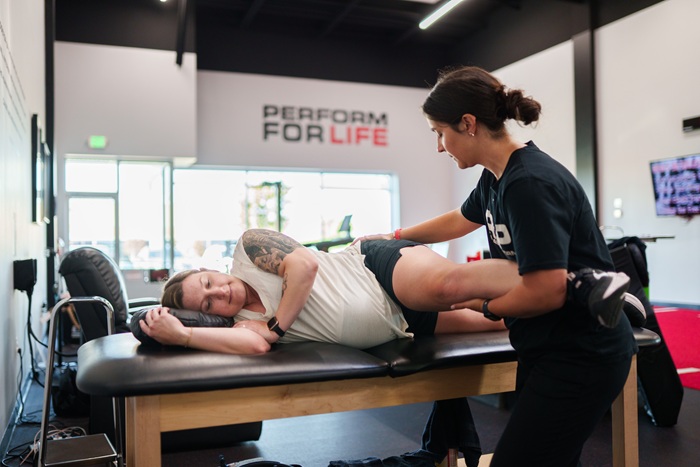
Our pelvic health team does not just look at the pelvis in isolation. We assess breathing mechanics, movement strategy, load tolerance, and your daily demands, whether that means picking up a toddler, walking the dog, or staying on your feet at work. Your plan is custom, guided by your symptoms and goals, not a one-size-fits-all checklist.
1. Assessing Load Transfer and Movement Strategy
We evaluate how forces move through your body when you squat, step, twist, or carry. Pelvic instability often shows up as asymmetry or compensation, which we correct through targeted cueing and movement repositioning.
2. Teaching Dynamic Core and Pelvic Control
Rather than relying solely on belts or passive bracing, we teach your body how to manage instability using breathwork, deep core coordination, and controlled progressive strength work.
3. Building Strength Through the Glutes and Core
A strong posterior chain is the foundation for pelvic stability. We integrate functional exercises that match where you are in your pregnancy, including:
- Glute bridges with breath coordination
- Step-downs and controlled single-leg loading
- Modified Side planks
- Standing hip abduction with breath connection
- Diaphragmatic breathing drills synced with pelvic floor engagement
When Should You See a Physical Therapist for Pelvic Pain in Pregnancy?
If you are experiencing any of the following, it is time to seek professional evaluation rather than wait and see:
- Pain while walking, climbing stairs, or changing positions
- Instability or locking around the hips or low back
- Pain with any single-leg activity
- A feeling of imbalance or poor movement control
- Symptoms that worsen with activity rather than improving
- Pain that is disrupting sleep, work, or daily function
Why Rehab 2 Perform Takes a Performance-First Approach to Pregnancy PT
Our goal is never just to quiet pain temporarily. We want you to move well, feel confident in your body, and stay as active as your pregnancy allows. That means bridging the gap between clinical rehab and real life, not managing you to a lower level of function.
You do not need to stop moving. You need to move with purpose.
If SI joint pain or pelvic instability is limiting your activity or making pregnancy harder than it should be, our pelvic health team is here to help. Schedule your evaluation HERE and discover what a performance-first pregnancy experience looks like.
What to Know
SI joint pain during pregnancy typically presents as a sharp or aching pain on one or both sides of the lower back, just above the buttocks. It often worsens with walking, climbing stairs, rolling over in bed, or standing on one leg. Some women also report a clicking or locking sensation near the back of the hips.
Pelvic instability during pregnancy is primarily caused by the hormone relaxin, which loosens ligaments throughout the pelvis to prepare for labor. When combined with postural changes, increased abdominal weight, and shifting muscle recruitment patterns, the sacroiliac joints can become irritated and poorly controlled.
Yes. Physical therapy is one of the most effective treatments for SI joint pain and pelvic instability during pregnancy. A pelvic health physical therapist can assess your movement patterns, teach you how to stabilize the pelvis through breathwork and targeted strength training, and reduce pain without medication.
In most cases, yes. Guided, progressive exercise is often one of the best things you can do for pelvic instability. Avoiding all movement can lead to more compensation and dysfunction. A physical therapist can determine which exercises are appropriate and safe for your specific stage of pregnancy and symptoms.
For some women, symptoms resolve after delivery. However, many continue to experience SI joint pain or pelvic floor dysfunction postpartum unless the underlying movement dysfunction is properly addressed. Seeking physical therapy during pregnancy can help prevent lingering symptoms after birth.
Rehab 2 Perform takes a performance-first approach to pelvic health. Rather than focusing solely on pain reduction, our therapists assess your full movement strategy, breathing mechanics, and load tolerance to build real functional stability. The goal is to keep you active, strong, and confident through pregnancy and beyond.
This blog is for educational purposes only and does not replace medical advice. Please consult your healthcare provider before starting any new recovery program.
- Dr. Jamie Schindler, DPT, SCS, CSCS, Pelvic Health Specialist & Area Director- Annapolis & Gambrills

About Rehab 2 Perform
Rehab 2 Perform is a leading physical therapy and sports rehabilitation company dedicated to helping clients achieve optimal performance in their daily lives, whether they are athletes, weekend warriors, or individuals recovering from injury. With a team of highly skilled professionals across the DMV, Rehab 2 Perform offers a personalized, evidence-based approach that emphasizes active rehabilitation and functional fitness. Find a Location near you, or Schedule Here.