Postpartum Strength Training: How to Build Back Stronger
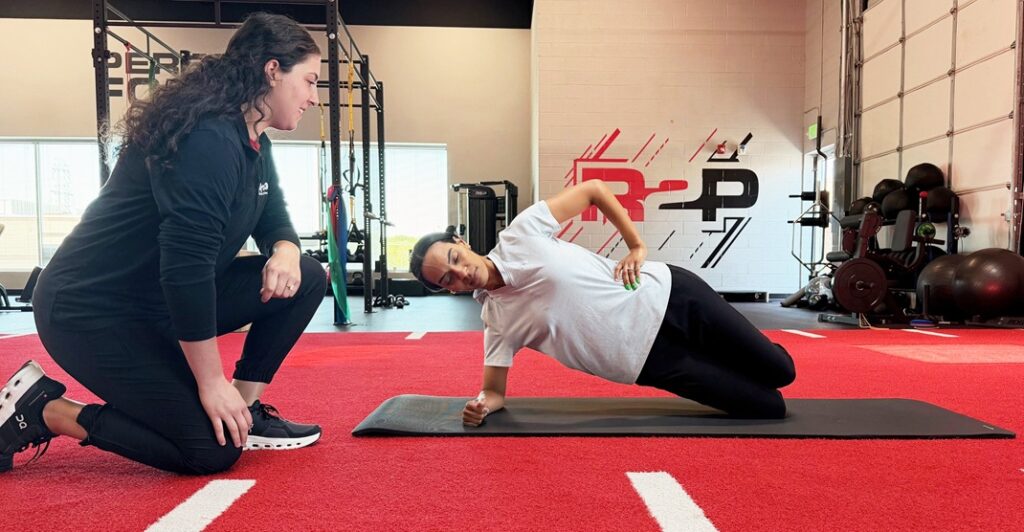
Most active moms know they want to get back to lifting. What they do not always have is a clear picture of how to actually get there. Not a vague “start slow” recommendation. A real progression. One that accounts for where the body is now, what it is being asked to do every day, and what it needs to handle before the weight goes back up.
Postpartum strength training progression is not complicated, but it does require a framework. Here is what that looks like.
Why Postpartum Strength Gains Do Not Follow a Linear Path
Before pregnancy, adding load was relatively straightforward. You trained, you recovered, you progressed. Postpartum, that model does not apply cleanly.
The body has spent nine months adapting to a growing load, then gone through the significant physical demand of delivery. Hormonal shifts affect tissue laxity for months after birth, particularly if breastfeeding. Sleep deprivation affects recovery rate. And the physical demands of new parenthood, carrying, feeding, bending, lifting, are already loading the system before you ever step into a gym.
Trying to apply a pre-pregnancy progression model to a postpartum body is one of the most common reasons active moms plateau, compensate, or end up managing symptoms that were not there at the start of the return.
The progression needs to match where the body actually is, not where it was before.
Phase 1: Build the Foundation Before You Build the Weight
The first phase of postpartum strength training is not about the barbell. It is about reestablishing the systems that make loaded movement safe and effective.
That means:
- Restoring intra-abdominal pressure management during movement
- Rebuilding hip and glute strength as a base for lower body loading
- Reestablishing shoulder stability before pressing or pulling at higher loads
- Confirming that breathing mechanics support rather than undermine the lift
This phase is not optional, and it is not about being cautious. It is about building a foundation that actually holds when the load increases. Skipping it does not accelerate the timeline. It shortens it.
Phase 2: Reintroduce Load Relative to Task Demand
Once the foundation is in place, load reintroduction should track against what the body is already managing daily. A mom who is consistently carrying a 20-pound infant, loading and unloading a stroller, and moving through a full day of physical caregiving is already under meaningful load.
The progression builds from there:
- Bodyweight movement quality established first
- Load added in ranges that match daily task demands before exceeding them
- Volume increased before intensity
- Single-leg and unilateral work prioritized to address asymmetry before bilateral loading
The goal of this phase is not to get back to your previous one-rep max. It is to build capacity that exceeds what daily life demands so that daily life becomes easier, not harder.
Phase 3: Return to Performance Training
Phase three is where the training starts to look like what most active moms are working toward. Barbell work, heavier compound movements, conditioning, sport-specific demands.
The criteria to progress here are not time-based. They are performance-based:
- No symptoms of leaking, heaviness, or pressure with current loading
- Movement quality maintained at higher intensities
- Recovery between sessions is adequate relative to training volume
- The body is tolerating daily demands without compensation
When those criteria are met, progressive overload can be applied the same way it would be in any well-structured strength program.
The Most Common Mistake in Postpartum Progression
Jumping from Phase 1 directly to Phase 3.
It happens because Phase 2 does not always feel hard. Bodyweight movements, moderate loads, foundational work. It can feel like not enough. But Phase 2 is where the adaptations happen that make Phase 3 sustainable. Skipping it is the reason so many active moms regress after early progress.
Respect the middle phase. It is where the actual work gets done.
Ready to Build a Real Progression?
If you are postpartum and want a strength training plan that is built around your actual capacity and your actual goals, the Postpartum Fitness Assessment at Rehab 2 Perform is where that starts.
We assess where you are in each phase, identify what needs to be addressed before load increases, and build a progression specific to your training history, your current function, and what you want to get back to. Whether that is powerlifting, CrossFit, or simply feeling strong and capable again, the plan is built around you.
This is not generic postpartum advice. It is a fitness-forward assessment for active moms who train and want to keep training.
What to Know – FAQs
Postpartum strength training progresses in phases: first rebuilding foundational movement and pressure management, then reintroducing load relative to daily task demands, then returning to performance training. Progression criteria are function-based, not time-based.
There is no universal timeline. Readiness to return to heavier loading depends on pelvic floor function, core coordination, movement quality, and whether any symptoms are present. A postpartum fitness assessment gives you a clear, individualized answer.
Plateaus often happen when the foundational phase is skipped and load is added before the body has rebuilt the systems that support it. Reintroducing volume and movement quality before intensity is the more sustainable approach.
No, it is not a medical evaluation. You can schedule your Postpartum Fitness Assessment directly at rehab2perform.com/postpartum-fitness.
- Dr. Jamie Schindler, DPT, SCS, CSCS, Pelvic Health Specialist & Area Director- Annapolis & Gambrills
About Rehab 2 Perform
Rehab 2 Perform is a leading physical therapy and sports rehabilitation company dedicated to helping clients achieve optimal performance in their daily lives, whether they are athletes, weekend warriors, or individuals recovering from injury. With a team of highly skilled professionals across the DMV, Rehab 2 Perform offers a personalized, evidence-based approach that emphasizes active rehabilitation and functional fitness. Find a Location near you, or Schedule Here.